
Norfolk City Bench Warrants Explained
People say "bench warrant" all the time, but Virginia courts write "capias" or "capias/bench warrant" on their papers. All of these labels point to process that can direct a person into custody. A Norfolk City judge may issue it after a missed required appearance, a problem with release conditions, contempt, or another court order. The label matters less than the pending court and the reason for the order. Traffic cases get their own wrinkle. Virginia law lets a court hear a traffic infraction in a person's absence and bars a warrant for that infraction alone. Criminal traffic charges work differently. Ask the Norfolk City clerk which process is actually in your case.
Norfolk Capias and Bench-Warrant Language
These Norfolk terms describe process, not an outcome. A capias can follow a failure to appear or another court-directed event. A summons orders a court appearance without the usual arrest command. An arrest warrant starts with a new probable-cause complaint. The public NPD list does not say which category a row falls under.
- Capias
- Virginia court term for process that directs an officer to take a person into custody.
- Failure to appear
- A missed appearance required by a court, summons, or release order; the court determines the effect.
- Recall
- A court action that withdraws process; the case itself may stay open.
- Return
- An officer's report back to a judicial officer or court about execution or other service status.
How Norfolk City Bench Warrants Are Issued
The court handling the underlying matter controls its own capias process. A judge can order it after a missed appearance or a release issue, and the clerk records the action. The Norfolk Magistrate's Office sits at a different checkpoint: magistrates review new complaints, issue qualifying process, and set bail. They do not hold the file on every existing bench warrant. The General District Court Manual describes a court-generated capias and the DC-323 form used when process is recalled before service. That manual is statewide guidance, not proof of how Norfolk City courts handle filings or walk-ins. Ask the clerk whether the form fits the specific case.
Norfolk City Courts Hold Different Process
Norfolk runs its local cases through three trial-court levels. General District Court covers adult misdemeanors, traffic, and local ordinances. Circuit Court handles felony indictments and trials. JDR takes juvenile and family matters plus some adult criminal cases. A judge or clerk in the return court controls the case action. The magistrate handles new-process and bail questions. The courthouse sits at 150 St. Paul's Boulevard, and the separate criminal and traffic desk numbers route a question to the right staff. Juvenile files stay closed to a general public search, even for a family or support case on the local calendar. The Norfolk General District Court page posts the clerk details for these questions.
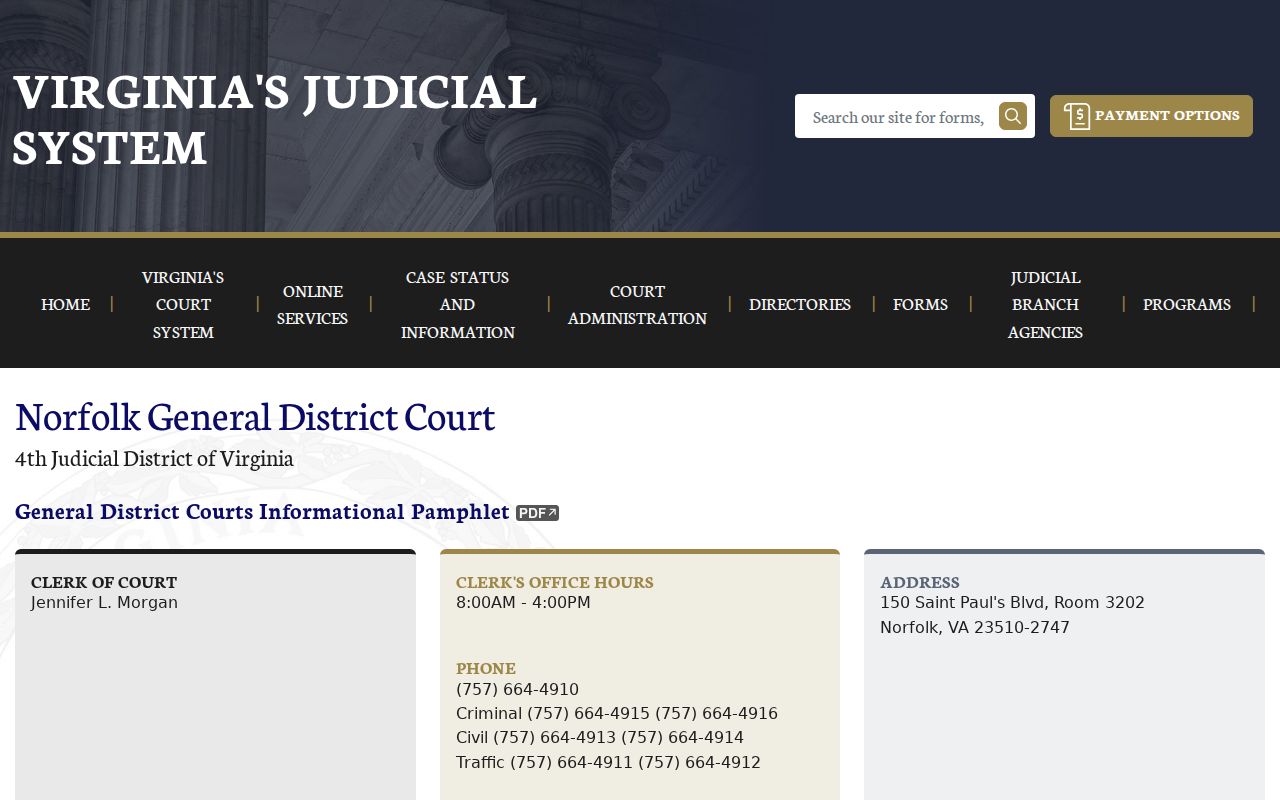
The General District Court page lists the clerk and the court's functions. For a Norfolk City adult misdemeanor or traffic case it is the practical start, though not for felony or JDR matters.
Bench Warrants and Arrest Warrants Compared
Both kinds of warrant can end in arrest, but they start in different places. A bench or capias process usually ties to a court obligation in an existing case. An arrest warrant follows a probable-cause review of a complaint or affidavit. If a public Norfolk entry does not name the process type, do not relabel it from the charge alone.
| Point | Bench or Capias | Arrest Warrant |
|---|---|---|
| Common trigger | Missed court duty or other court order | Probable cause for an alleged offense |
| Case posture | Often a matter already before a court | May start a new criminal case |
| First contact | Clerk of the return court | Issuing magistrate or court, then clerk |
| Next step | Ask about recall, appearance, or bond | Ask about service, return court, and bail |
Magistrate review and service roles for probable-cause process are covered by the Norfolk City arrest warrant search.
DC-323 Recall of Process at Norfolk GDC
The GDC Manual names DC-323 as the Recall of Process form for process recalled before service, which includes a voluntary appearance after a capias. Norfolk City does not post a blank copy of that form. The clerk should confirm whether DC-323 is the right document, who must file it, and whether a judge must review it. Never assume that paying a fine or calling a clerk recalls a criminal capias on its own. Ask for the court's order or written status, then check how the record updates. A recall ends the process as ordered. It does not dismiss the charge or cancel a future hearing. For felony-court contacts, use the Norfolk Circuit Court clerk page.
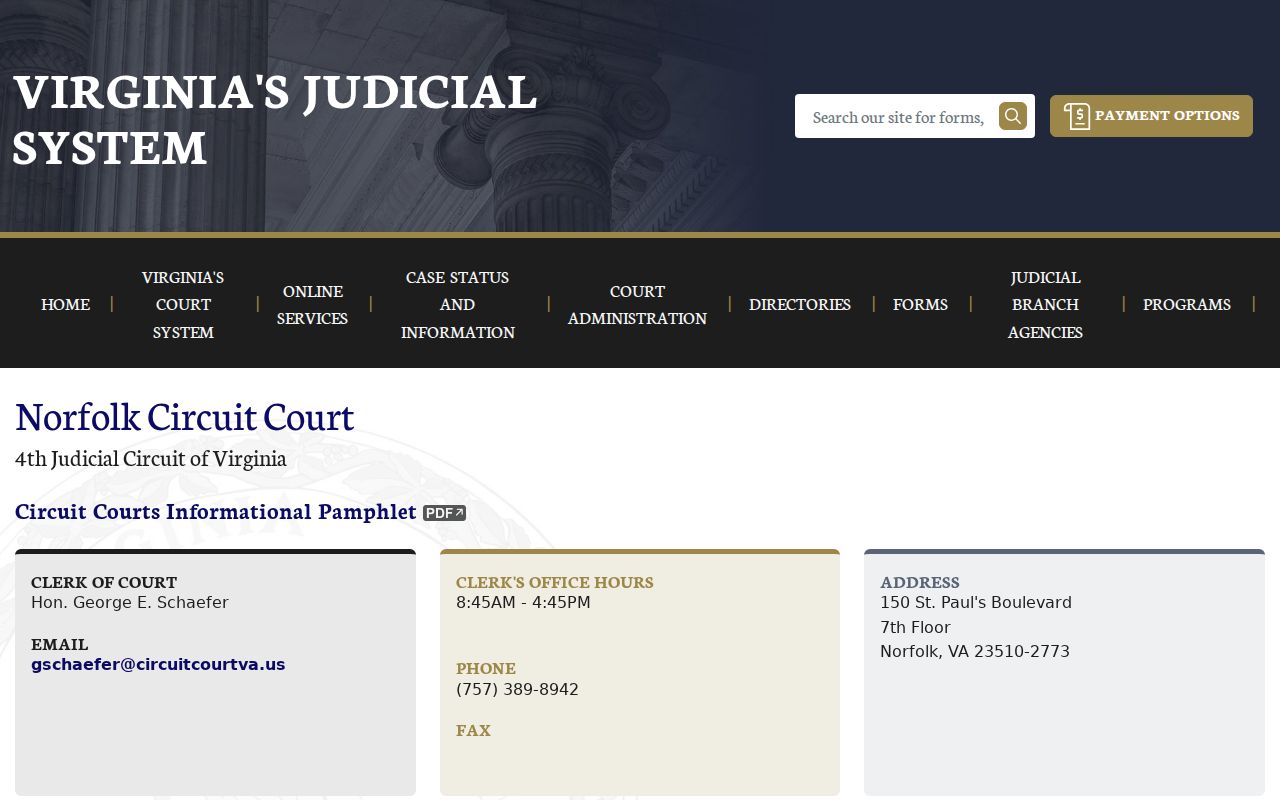
The Circuit Court clerk handles felony indictments and circuit process. Do not carry a GDC form reference into a Circuit case without confirmation from the Norfolk clerk.
Resolving a Norfolk City Bench Warrant
Find the return court and ask what is still required. The Norfolk City court may set a new date, take a motion, order an appearance, or decide bond. A lawyer can call the clerk, prepare a request, and plan a lawful appearance. Norfolk posts no public walk-in surrender window and no standard bond schedule.
- Use OCIS or the summons to identify the court and case number.
- Call the court's criminal, traffic, or JDR clerk and ask whether the process remains active.
- Ask if a motion, DC-323, personal appearance, or counsel is needed.
- Confirm the reporting location and hours before travel; ask about security and ID rules.
- Keep the order, receipt, and next date, and continue the underlying case.
Before traveling: Call the issuing court or your lawyer first; no official source found a universal walk-in recall or surrender counter for Norfolk.
A Norfolk City Recall Is Not a Dismissal
A recall and a dismissal are not the same thing. Norfolk City courts treat a recall, a bond order, and a case disposition as separate entries. A withdrawn warrant can leave the case pending, with fines or conditions still in force. A new hearing may still be set. Ask the clerk for the court's written action, and ask when its records should update. A public Norfolk City page catching up later is only a secondary check. Virginia Code § 19.2-128 covers willful failure to appear, with possible forfeiture or separate consequences. Not every missed date brings the same charge, though. The judge weighs the case and the law. Ask which order is alleged and what the court requires now.
Finding the Court That Issued the Warrant
Start with the court on the summons, case notice, or prior order. In Norfolk City, General District Court criminal staff take calls at 757-664-4915 and 757-664-4916. Traffic staff use 757-664-4911 and 757-664-4912. The Circuit Court clerk is at 757-389-8942. Juvenile and Domestic Relations is at 757-664-7340. Give the clerk your case number and ask which process is recorded. If papers are missing, search OCIS and call the likely clerk. A new complaint or an initial bail question may go to the District 4 magistrate at 757-664-4198. The City's help page also lists 757-664-4799, so confirm which number is current before you travel. The GDC Manual explains the statewide recall form reference. The Norfolk JDR Court page posts its records and clerk guidance.
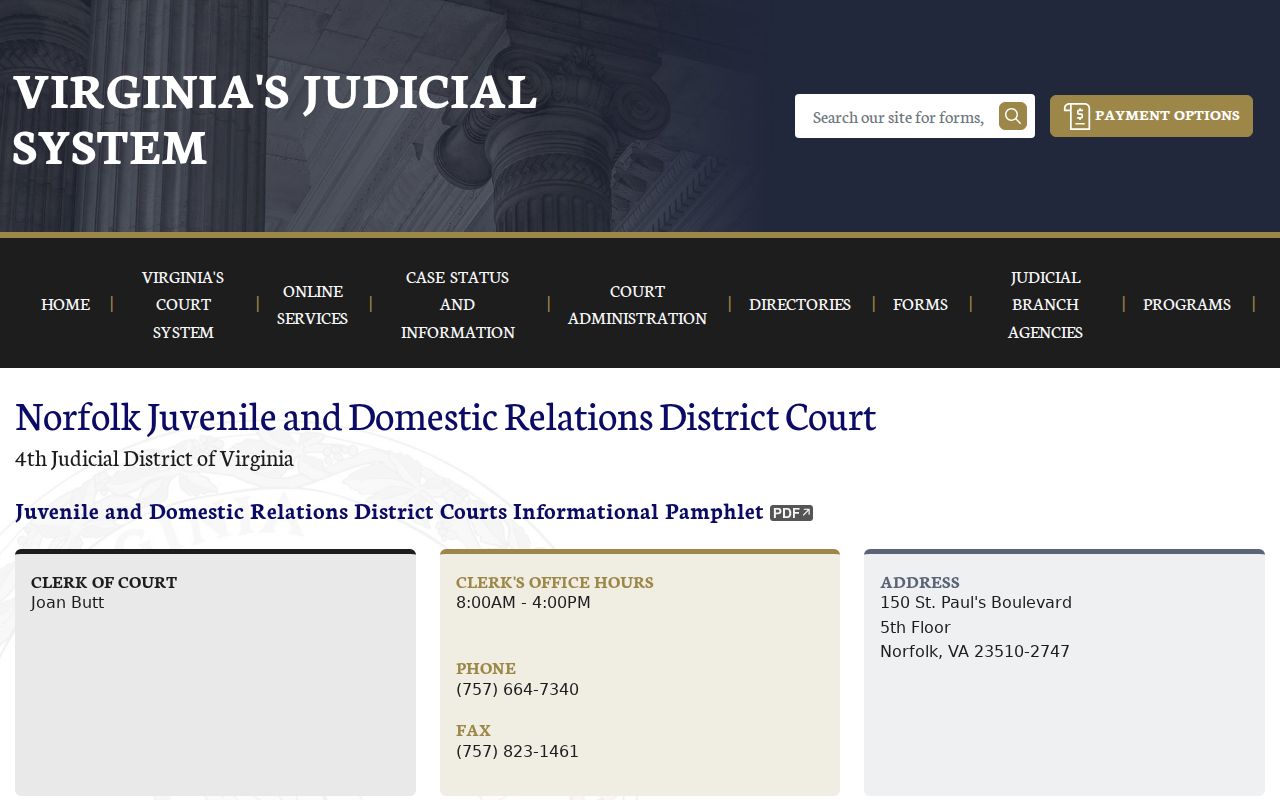
Norfolk City JDR handles adult matters plus confidential juvenile and family files. Ask its clerk what you may inspect, since OCIS may not show the whole file.
No Published Norfolk City Amnesty Window
No Norfolk City office runs a warrant-amnesty event or safe-surrender week. Check the City, NPD, court, and Sheriff pages yourself. A court can still consider a recall, a reset, or a negotiated appearance in an individual matter. Those options come from the issuing court and the law. The Norfolk Sheriff's scam notice is worth knowing. The office will not call to say you have a warrant or demand money by phone. Verify any surprise payment demand through a published government number. After a recall, keep the next hearing date; the case continues unless the court separately dismisses it.